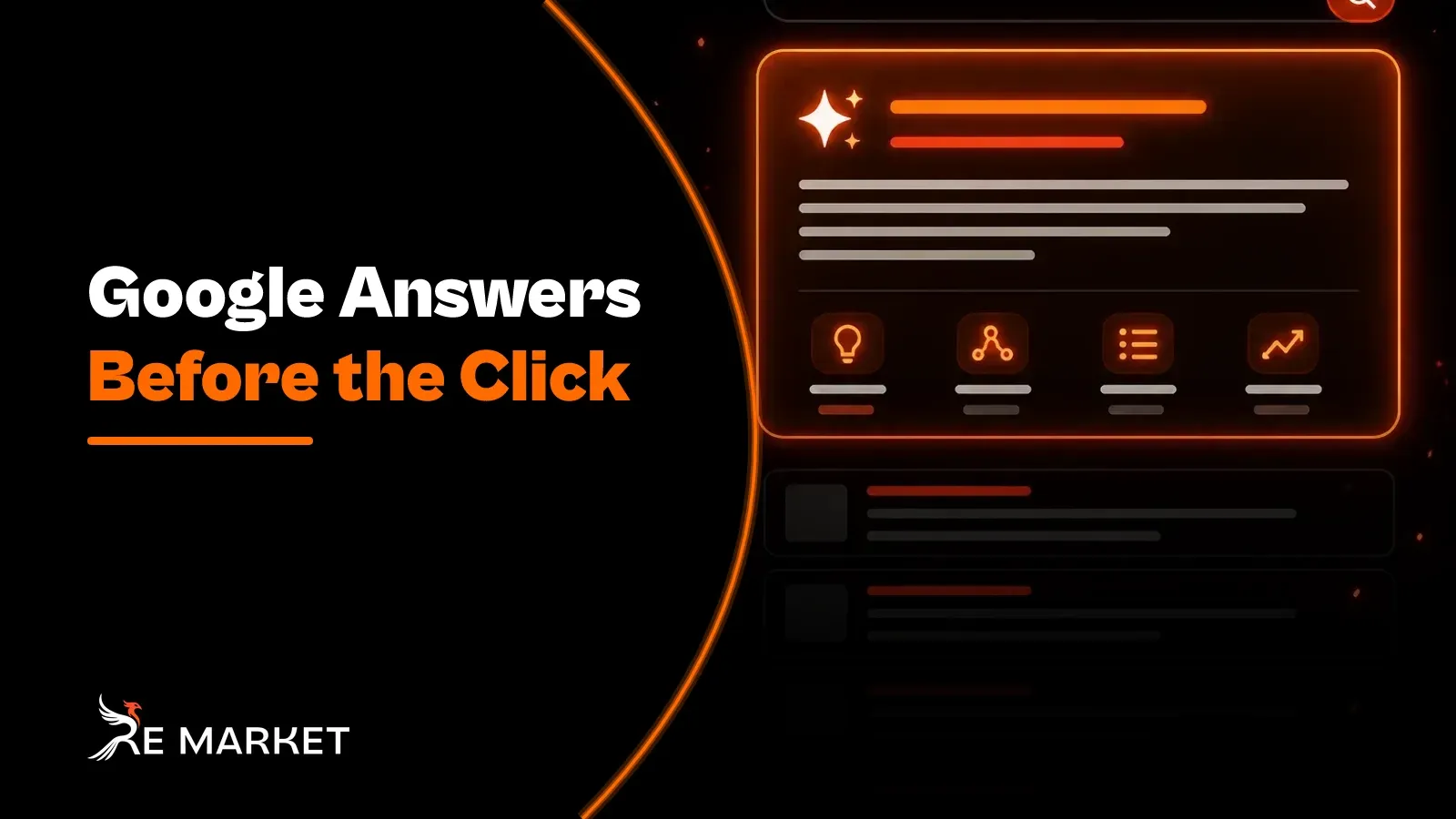

A few years ago, someone who needed a plumber typed “emergency plumber near me” into Google and picked from a list. Today, a growing share of those people open ChatGPT, Perplexity, or Google’s AI Overview and simply ask: “who is the best emergency plumber in my area, open now?” The engine reads the web, weighs its options, and hands back one or two names.
If your business is not one of those names, you never even entered the race. This is the new front door for local search, and most local businesses have not noticed it moved.
What “AI visibility” actually means
AI visibility is how often, and how accurately, AI answer engines mention and recommend your business when someone asks a question you should be the answer to. It has three parts:
- Are you named at all when a customer asks for a business like yours?
- Is what the engine says about you correct (services, area, hours, specialties)?
- Does it have a reason to prefer you over the competitor down the road?
Why this is different from ranking on Google
Classic SEO is about earning a position on a page of ten blue links. A customer still does the choosing. AI search compresses that. The engine does the choosing and usually surfaces one to three options, so the gap between “recommended” and “invisible” is far wider than the gap between position 3 and position 8.
Two more differences matter for local businesses:
- Structured, consistent data counts for more. AI engines lean heavily on machine-readable facts: your name, address, phone, services, and hours being identical everywhere they appear. Small inconsistencies that barely dented your Google ranking can quietly drop you out of an AI answer.
- Reviews do double duty. They influence both your map-pack ranking and the language an engine uses to describe you. “Highly rated for same-day service” is a phrase an engine can only produce if your reviews actually say it.
How to audit the way you show up today
You do not need a tool to start. You need to ask the engines what a customer would ask, and read the answer honestly.
Try prompts like these in ChatGPT, Perplexity, and Google’s AI mode:
- “Best [your service] in [your town]?”
- “Who should I call for [specific problem] near [neighborhood]?”
- “Compare the top [your service] businesses in [your area].”
For each one, note three things: were you mentioned, was the description accurate, and did the engine cite a source? Where you are missing or misdescribed is your to-do list.
The fixes that move the needle first
Once you can see the gaps, the highest-leverage fixes are usually the least glamorous:
- Complete and tighten your Google Business Profile. Correct categories, services, hours, service area, and photos. This is the single richest source most engines read.
- Make your website say what you do and where, clearly. One page per core service, plain language, your service area named, and a phone number that is obvious on mobile.
- Add structured data. LocalBusiness schema that states your name, address, phone, hours, and services in a format engines can read without guessing.
- Build a steady flow of real reviews. Recent, specific reviews give engines the language they need to recommend you with confidence.
- Fix your listings. Make sure your name, address, and phone are identical across every directory. Contradictions make engines cautious.
None of this is a trick. It is the same honest groundwork that has always helped local businesses get found, now aimed at a new and less forgiving reader.
Where to start
If you only do one thing this week, run the audit above and write down every place an engine got you wrong or left you out. That list is the difference between watching customers get routed to a competitor and becoming the answer yourself.
If you would rather have it done for you, that is exactly what a Re Market AI-visibility audit delivers: a clear picture of how you show up across the engines today, and the specific fixes that will get you into the answer.
How do I know if AI engines are recommending my business?
Ask them. Open ChatGPT, Perplexity, and Google's AI mode and ask the questions a customer would ask about a business like yours. Note whether you are named, whether the description is accurate, and whether a source is cited. That is a basic AI-visibility audit.
Is AI visibility just SEO with a new name?
It overlaps but is not identical. Strong local SEO helps, but AI engines rely more on consistent structured data, reviews, and accurate business information across the web. You can rank reasonably on Google and still be invisible to AI if those signals are weak.
How long does it take to improve?
Foundational fixes like a complete Google Business Profile, accurate listings, and structured data can be reflected within weeks. Review-driven and content-driven gains compound over months, similar to SEO.